Case study · /02
Pump Game
Turning crypto fear into play: a 30-second Ethereum prediction game that led new users to Wallex
- Role
- Product designer, Wallex Exchange
- Timeline
- 6 months, 2021–2022
- Team
- 2 PMs, 3 developers, 3 designers
- Focus
- UI design, UX research, Gamification, Fintech
- Status
- Live · pumpgame.ir
Ben is curious about crypto. He’s also sure he’ll lose his money.
In research, three fears kept coming up: losing real money in a market people didn’t understand, crypto feeling too risky, and money they couldn’t see (“I can’t see where my money goes”). Before anyone trades, they have to trust. Wallex had to earn that without asking for money.
Ben gets this close, every time.
Try pressing Buy.
People signed up, got verified, then never traded.
That’s what pushed us to build Pump. Wallex had plenty of new users who registered, verified their identity and then stopped before their first trade. Many left the platform altogether. When we interviewed more than 30 people over two weeks, the reasons were the risks everyone overthinks about crypto: money you can’t touch, that might be gone tomorrow if you don’t know what you’re doing. Some already knew crypto and found the tools too complicated. Others were curious but didn’t trust it.
Both needed the same thing: a safe place to learn by doing.
What if the first trade cost nothing?
How might we help people experience crypto trading without the fear of losing real money?
Play first, pay never. Instead of asking people to trust Wallex with their money, we let them play: a 30-second call on Ethereum, up or down, with nothing to lose. If they could feel how the market moves without risking a coin, they’d come to Wallex when they were ready.
Ethereum · next 30 secondsDemo
Up or down? Try it.
You called Up. Waiting for the price…
Start Now
You made a call. Nothing was at stake.
A demo, not live prices, and sped up: in Pump Game the first call lasts 30 seconds, and calls get longer as you climb.
- 1
Learn
Short tasks about crypto and Wallex earn tickets.
- 2
Play
A ticket starts a run. Each correct call climbs a step, and the prize grows.
You just did this - 3
Connect
Finish and withdraw: the prize goes to a Wallex wallet.
Every call ends with a reason to come back
Two loops kept Pump Game turning. The first brings players back: a correct call climbs a step and grows the prize, and a miss puts the run on hold until a ticket retries the step. The second brings their friends: an invite code and short tasks earn more tickets. A leaderboard ranks the players. Tickets, not money, set the pace. No one ever stakes their own money, so it stays a game, not a gamble. Whenever players want to stop, they finish and withdraw the prize to a Wallex wallet.
- 1Make a call Up or down: say where the price goes next.
- 2Right? Climb A correct call climbs a step, and the prize grows.
- 3Wrong? On hold A miss puts the run on hold: a ticket retries the step, or walk away and the ladder resets.
- 4Share your code Every player has an invite code to send to friends.
- 5A friend joins When a friend signs up and plays, both get tickets.
- 6Do tasks Short tasks about crypto and Wallex earn more tickets.
Version one looked like Wallex. That was the problem.
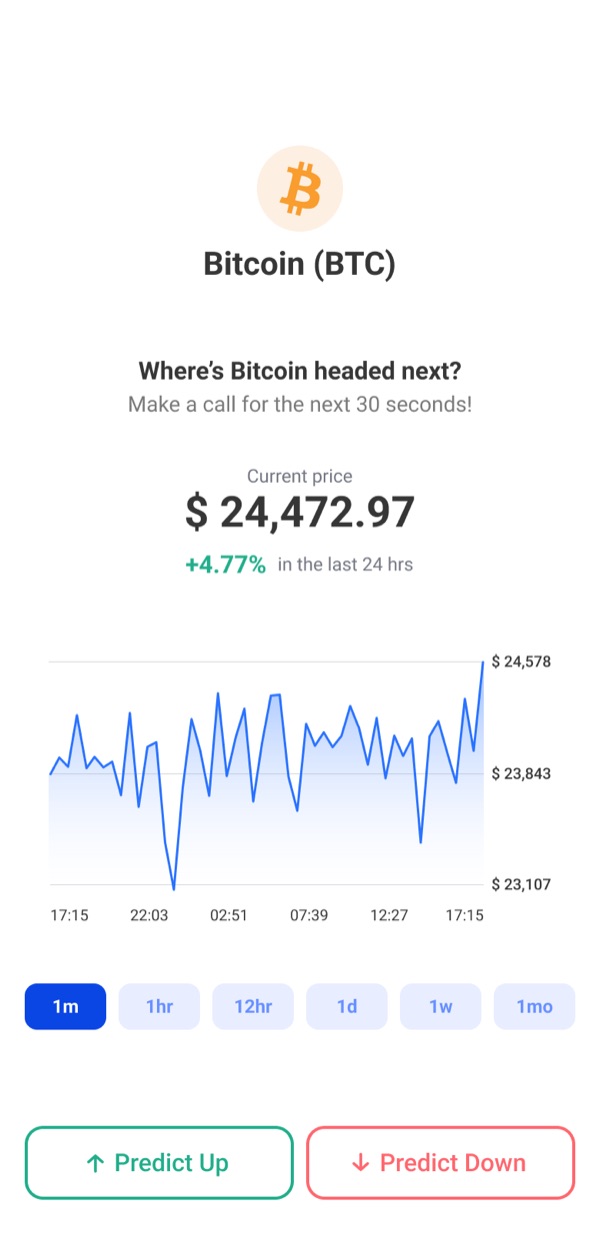
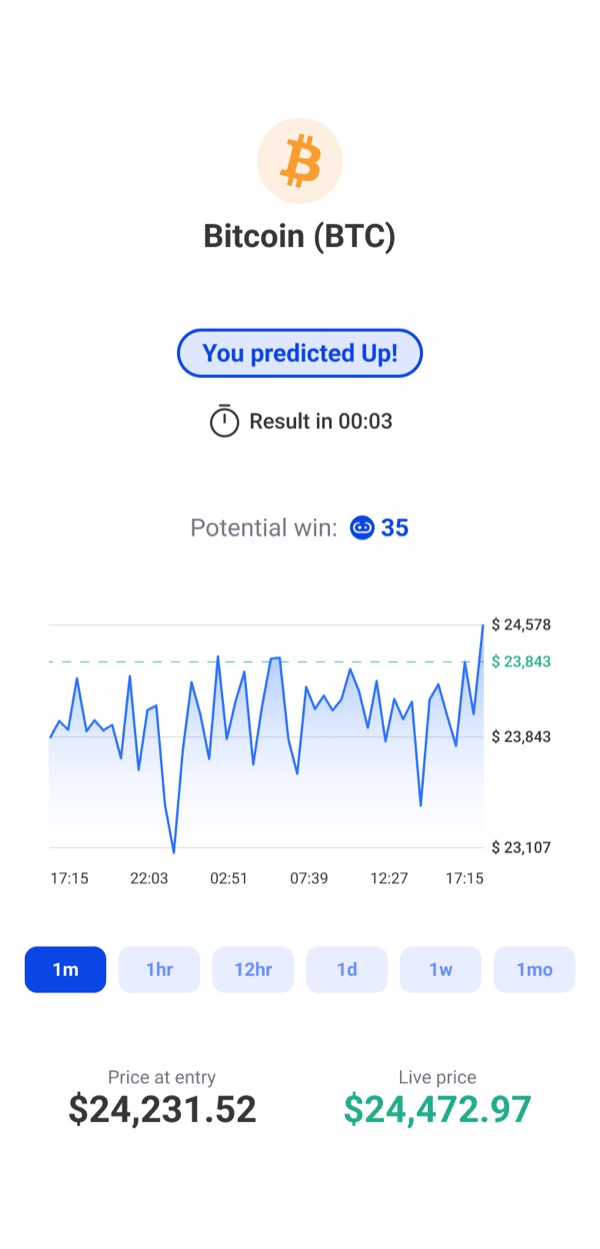
The first version followed Wallex’s design system, so it read as one more screen of the exchange: light pages, a chart with time ranges, two outline buttons and a coin of its own, Clinks. Tests with players, then a design review, showed that people wanted a game, not another trading screen. So we kept the call and rebuilt everything around it.
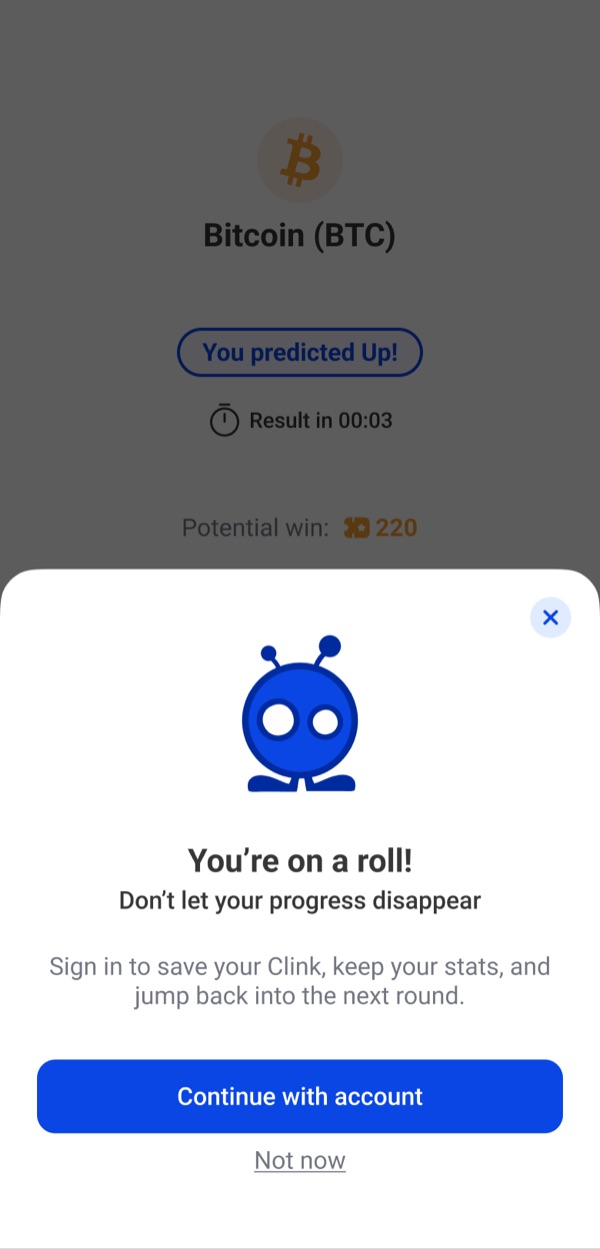
To cash out a win, players had to join Wallex. They did.
The game grew into a team sport
By launch, missions taught more about crypto, the start of a “Duolingo for crypto” idea we designed later. And referrals became teams: players invited friends, formed a group, predicted together and competed with other teams. The players who liked inviting people kept bringing their team back.
Withdrawing turned players into Wallex users
To withdraw their tether, players verified with Wallex, opened a wallet and linked it to Pump Game. People who had been afraid of crypto came in through a game, and the rewards broke that fear.
What I’d measure next
Players who come back within 7 days, and how many runs end in a cash-out rather than a walk-away.
What I’d do differently: design the hard moments first
Losing, a dropped price feed, running out of tickets. These moments decide whether a player trusts the game, and version one had none of them. I’d design them before the happy path.
-
Pump Game launched in 2025. Wallex reports it brought in more than a million new users.
Today Wallex’s website lists more than a million active users. Live · pumpgame.ir